Seasonal Wedding Floral Trends for the New England Bride
New England weddings live and die by the season. A bride getting married in October at a restored farmhouse in Concord is working with a completely different palette than one saying her vows in a Belmont garden in late June. Getting the flowers right means understanding not just what looks beautiful, but what is actually in season, what will hold up in the humidity of August or the chill of a November venue, and what the local growers in eastern Massachusetts can reliably supply. Boutique studios that work primarily in the Greater Boston area have spent years refining these choices. What follows is a practical breakdown of what works, season by season.
Spring: Abundance Without Excess
Spring weddings in New England typically fall in late April through early June. The instinct is to go full English garden -- peonies, ranunculus, sweet peas -- and that instinct is largely correct, but timing is everything. True New England spring arrives late. Local peonies rarely peak before late May. Brides marrying in early May who want locally sourced peonies are almost always disappointed; the flowers available at that point come from further south or from growers in warmer zones.
The smarter approach in early May: build around tulips and lilac. Both are genuinely in season in Massachusetts, both photograph exceptionally well, and neither needs to be forced. Lilac in particular is underused in wedding florals. It brings texture, a pale lavender-to-purple gradient, and an unmistakable fragrance that fills a room without being overwhelming. Pair lilac with cream garden roses and white sweet peas, and you have a spring arrangement that is grounded in what the region actually grows.
By late May and into June, ranunculus arrive in earnest. This is the moment to go lush. A late-May ceremony can support overflowing centerpieces in blush, peach, and soft coral -- colors that work equally well for barn venues and historic properties. Keep the greenery restrained: Italian ruscus or eucalyptus provides structure without competing with the blooms.
Summer: Managing Heat and Humidity
Summer weddings in New England present a logistical challenge that no amount of floral talent fully eliminates: heat. By late July, daytime temperatures regularly hit the mid-80s, and venue humidity -- particularly in older buildings without modern climate control -- can spike dramatically. Flowers that look stunning in a studio at 9 a.m. can wilt by the cocktail hour if the choice of variety is wrong.
Florists who work primarily in the area lean heavily on heat-tolerant varieties for summer events: zinnias, sunflowers, amaranth, celosias. These are not second-choice flowers. Zinnias in mixed hues -- coral, gold, scarlet, and cream -- create arrangements with a warmth and energy that roses cannot replicate in the same season. They also source locally; many farms in the Pioneer Valley and along the South Shore grow cut zinnias specifically for the Boston market.
Hydrangea is a summer staple in Massachusetts, but it demands careful handling. Use it in mechanics where stems remain in water as long as possible before display, and avoid placing arrangements in direct sunlight. For outdoor ceremonies, hydrangea should be reserved for areas with afternoon shade. When handled correctly, though, it is unmatched for volume and that distinctly New England summer aesthetic.
Autumn: The Strongest Season
Autumn is the reason many couples choose New England for their wedding. The foliage, the light, the cool air -- it all comes together in a way that no other region replicates. And the floral options in September and October are genuinely outstanding: dahlias peak in late summer through early October, making them the undisputed star of fall wedding florals in this region.
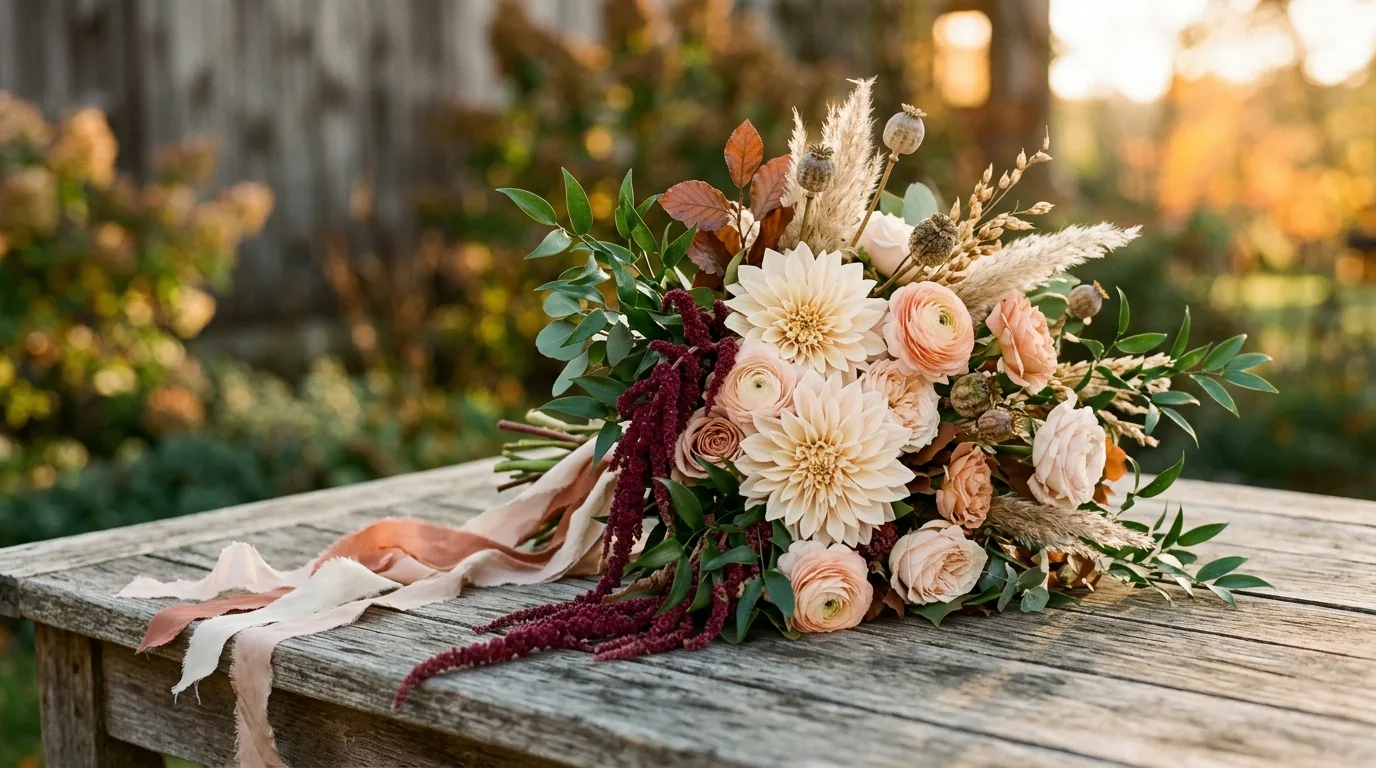
Dahlias reward working with a local grower. Farm-direct dahlias in late September offer varieties and colorways that wholesalers rarely carry: deep burgundy cafe au lait, dark chocolate, rich plum, bright tangerine. For an autumn wedding in a venue with exposed brick or natural wood tones, a centerpiece built around these dahlias with accents of amaranth and seasonal berries is more striking than anything achievable with imported flowers.
Beyond dahlias, fall brings persimmon branches, bittersweet vine, dried oak leaves, and late-season crabapples -- all of which can be incorporated into ceremony installations and table arrangements for a look that is specific to the place and the moment. The key editorial choice is restraint: autumn New England already has so much visual richness that florals should complement it, not compete.
Winter: Elegance Through Limitation
Winter weddings are rare in New England but growing. The appeal is real: snow-covered landscapes, fire-lit interiors, a kind of intimacy that summer weddings rarely achieve. The floral challenge is that the local growing season is entirely dormant. Everything comes from wholesale sources, which means the emphasis shifts from seasonal provenance to variety and design intention.
For winter, the strongest approach is to anchor arrangements in evergreen branches -- white pine, cedar, noble fir -- and build out from there with forced amaryllis, white ranunculus, and winter white anemones. The black center of an anemone against its white petals creates a graphic contrast that reads beautifully in candlelit venues. Add in dried elements: cotton bolls, bleached seed pods, preserved eucalyptus. The result is a winter palette that feels intentional rather than apologetic about the season.
Choosing Your Florist Around These Realities
The most common mistake couples make is selecting a florist based on portfolio photos taken in a different season. A stunning all-peony bouquet photographed in June means nothing if your wedding is in September. Ask any florist you're considering to walk you through specifically what will be available and locally sourceable on your date. A studio with deep ties to eastern Massachusetts growers -- farms in Concord, Westford, and the South Shore -- will give you a direct and honest answer. That answer should be the foundation of your floral plan.