Guide to Sustainable and Philanthropic Event Planning
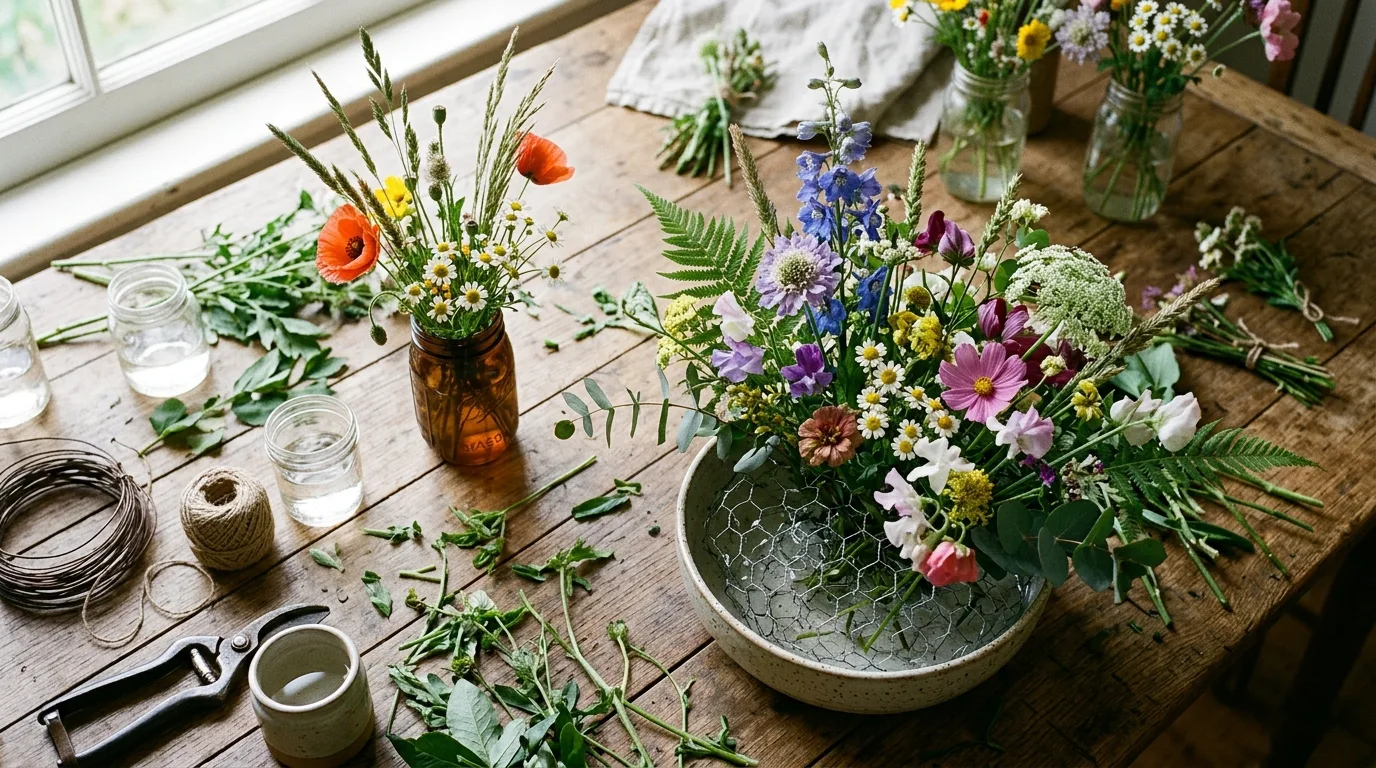
Most conversations about sustainable events focus on paper straws and compostable plates. Those choices matter, but they miss the larger question: what happens to the significant resources that go into an event after it ends? For florals specifically -- one of the highest-cost and highest-waste categories in event production -- the standard industry model is still largely one of disposal. Arrangements are built, displayed for a few hours, and thrown away. A studio that operates with a genuine commitment to sustainability and community impact looks at that outcome and treats it as a design problem, not an inevitability.
The Waste Problem in Event Florals
A single wedding in the Greater Boston area typically consumes between 200 and 600 stems of cut flowers, depending on the size of the event. Add in ceremony installations, boutonnieres, corsages, and cocktail hour florals, and the total for a mid-sized wedding can reach well above 1,000 stems. For a corporate gala with 20 tables and a stage installation, 1,500 stems is not unusual.
Under conventional industry practice, the vast majority of this material ends up in a dumpster the next morning. Venues discard flowers with the rest of the event debris. Florists who rent containers reclaim the vessels but not the florals. The environmental accounting here is not trivial: cut flowers are resource-intensive to grow, and many commercially available stems are imported from South America, carrying a substantial carbon footprint before they ever arrive at a Boston wholesaler.
Sustainable event planning addresses this through a combination of sourcing choices, design mechanics, and post-event protocols.
Local and Seasonal Sourcing
The most impactful sourcing decision a florist can make is to prioritize flowers grown within a short distance of the event. Eastern Massachusetts has a growing community of cut flower farms -- operations in Concord, Carlisle, Westford, and along the South Shore that supply directly to florists and farmers markets. Flowers sourced from these farms arrive fresher, require no air freight, and support the regional agricultural economy.
The practical tradeoff is variety. Local growers in Massachusetts cannot supply every flower in every color year-round. A florist committed to local sourcing has to be willing to design around what is available, not around a Pinterest board assembled without regard for season. This is actually a creative strength: arrangements built from what is genuinely in season at the time of the event have a specificity and freshness that imported alternatives cannot match.
Beyond sourcing, design choices that minimize waste matter. Building foam-free arrangements using water-based mechanics -- chicken wire, flower frogs, hand-tied techniques -- eliminates floral foam from the equation. Floral foam is a petroleum-based product that does not biodegrade and has been flagged by environmental researchers as a significant source of microplastic contamination. Many studios have transitioned entirely away from it, with no reduction in design quality.
Donation Programs: Connecting Events to Community
One of the most effective ways to extend the life of event florals is through a structured donation program. The mechanics are straightforward: within 24 to 48 hours of an event, arrangements in good condition are delivered to organizations that can distribute them -- assisted living facilities, homeless shelters, hospice programs, community centers, and food pantries.
Organizations like Community Cooks in the Boston area, which prepares and delivers meals to people in need, operate facilities where flowers in common areas meaningfully improve the environment for both residents and staff. Room to Grow, which works with families of young children living in poverty, can receive flower donations at offices and community events where they signal care and welcome. These partnerships require logistics -- a florist needs to coordinate pickup windows with venues, communicate with recipient organizations, and ensure that donated arrangements are in a condition worth giving -- but the operational overhead is manageable for a studio that builds it into standard procedure.
This model has an additional benefit: it becomes part of the story the event tells. Clients who hire a studio with an active donation program can communicate that fact to their guests. A card at each table explaining that the centerpieces will be delivered the following morning to a specific organization transforms the flowers from decoration into something with a second act.
Philanthropic Business Models in the Floral Industry
Beyond post-event donation, some studios operate with a broader philanthropic commitment built into the business itself. Allocating a portion of profits -- rather than just a portion of flowers -- to charitable organizations is a model that changes the fundamental relationship between commerce and community impact. When a studio commits 50% of profits to local nonprofits, every event it books becomes a direct mechanism for community investment.
For clients who care about where their money goes, this is a meaningful differentiator. The total spend on florals for a wedding or corporate event is substantial. Knowing that half of the profit generated by that spend flows directly to organizations working on food security or child development changes the calculus of who to hire.
Practical Steps for Event Planners
Sourcing: Require florists to identify what percentage of stems will come from farms within 150 miles of the venue. Ask for farm names when possible.
Design mechanics: Specify foam-free arrangements. This is now standard practice for studios that have made the commitment, and it does not limit design options in any meaningful way.
Post-event logistics: Build a flower donation handoff into the event timeline. Identify the recipient organization in advance, confirm delivery logistics with the venue, and brief the event coordinator on the protocol.
Business model review: Ask florists directly whether they have any structured charitable giving. A studio that donates a percentage of profits is not just doing good work -- it is also likely to be operated by someone who takes their practice seriously.
Composting: For stems and florals that cannot be donated, arrange for compostable material to go to a municipal composting program rather than general waste. Most Boston-area municipalities have food and yard waste composting programs that accept cut flowers.
The event planning industry generates substantial waste and, when structured intentionally, substantial community benefit. The two are not in tension. A studio built around sustainable sourcing, donation programming, and charitable giving demonstrates that the highest-quality event work and meaningful community impact are not just compatible -- they reinforce each other.