Centerpieces that don't block conversation
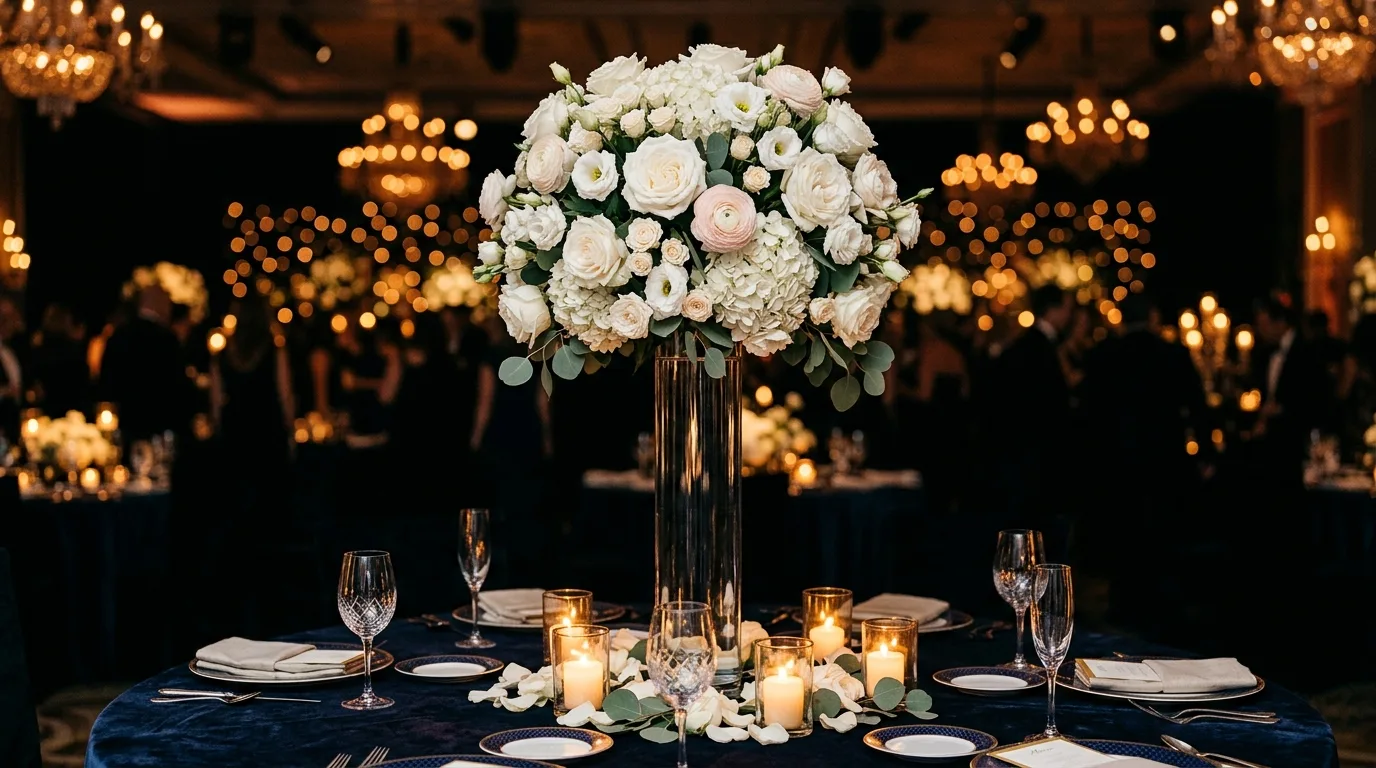
A centerpiece sits in the one place every guest looks for hours, which is why getting its height wrong is so noticeable. If the flowers fill the space between two people's faces, guests spend dinner leaning around them or talking only to the person beside them. Getting it right comes down to a few measurements, a choice between low and tall, and a check at a real table before the event.
The sightline zone
Most dining and banquet tables are about 30 inches high, and a seated adult's eyes sit roughly 15 to 18 inches above the tabletop, depending on the person and the chair. That band is the sightline zone. Flowers kept below it or lifted above it leave faces visible, and anything solid inside it blocks the view across the table.
Those numbers give a simple rule of thumb that many planners use. Low centerpieces stay under about 12 to 14 inches including the vase, and tall centerpieces keep the bulk of their flowers above about 24 inches, with only a slim stem, a clear vase, or a thin stand passing through the zone. Tall guests and low chairs shift it a little, so treat the figures as a starting point and test them.
Low arrangements
Low centerpieces suit most rooms and most budgets, and they make conversation easy. Compote bowls, footed urns, and low cylinders all work, as do loose clusters of bud vases. Keep the widest part of the arrangement low and let only a few airy stems, like sweet peas, cosmos, or grasses, rise above the main mass, since thin stems are easy to see through.
Fragrance needs more thought on a dinner table than anywhere else in the room. Strongly scented flowers such as lilies, tuberose, hyacinths, and paperwhites can compete with food at close range, so many florists keep them for entrances, bars, and ceremony pieces. Lily pollen also stains linens and clothing, which is why florists usually pull the anthers before the flowers open fully.
Tall arrangements
Tall centerpieces give a room height and drama, and they work best in large rooms with high ceilings, where low arrangements can look lost. The flowers should start above the sightline zone, held up by a slim clear cylinder, a tall trumpet vase, or a metal stand. A clear vessel keeps the view open, while a wide solid urn on a short pedestal fills the band you're trying to keep clear. The article on corporate gala centerpieces describes the column format that suits bigger rooms.
Tall pieces need stable bases. Weighted stands help in rooms where guests will brush past, and arrangements with long trailing material should hang above shoulder height so they don't catch on hair or glasses. Check the ceiling height, any chandeliers, and the venue's rules on open flame if candles are part of the design, since many venues require flames to be enclosed in glass. Mixing tall and low pieces across a room is common, and it also spreads the cost, which the guide to budgeting for wedding flowers covers.
Round tables and long tables
Round tables usually come in 60-inch and 72-inch sizes, seating roughly 8 to 10 and 10 to 12 guests. The center of a bare round looks spacious, but plates, bread plates, glassware, and menu cards claim most of it once the table is set. On a 60-inch round, an arrangement whose base fits within about 12 to 16 inches usually leaves room for everything else, and the base of a tall piece should be small enough that guests can pass dishes around it.
Long banquet tables are often only 30 inches wide, which leaves a narrow strip down the middle once place settings are down. A single large arrangement rarely fits there, and a run of low pieces works better, such as a garland of greenery with flowers tucked in, a line of bud vases, or low arrangements alternating with candles. On wider farm tables, two or three low arrangements spaced along the length keep each end of the table feeling connected to the other.
Family-style service and late changes
If dinner is served family style, platters need to sit in the middle of the table, and that's usually the space the flowers were going to use. Ask the caterer how much room the platters need before you settle on centerpieces, and consider garlands or bud vases that can shift to the ends. Buffets, food stations, and dance floors can also change table layouts late, so confirm the final floor plan with the venue before the florist fixes the count.
Test it before the day
Sit down with a sample centerpiece
Before the florist builds thirty arrangements, ask for one sample, set it on a table with a full place setting, and sit in the chairs. Look across at someone of average height and someone shorter, and check that you can see each other's faces and reach your glasses without moving the piece. If the venue allows it, test under the evening lighting too, since candlelight and dim rooms change how colors read. The questions to ask a florist include how mock-ups are usually priced and scheduled.