How to budget for wedding flowers
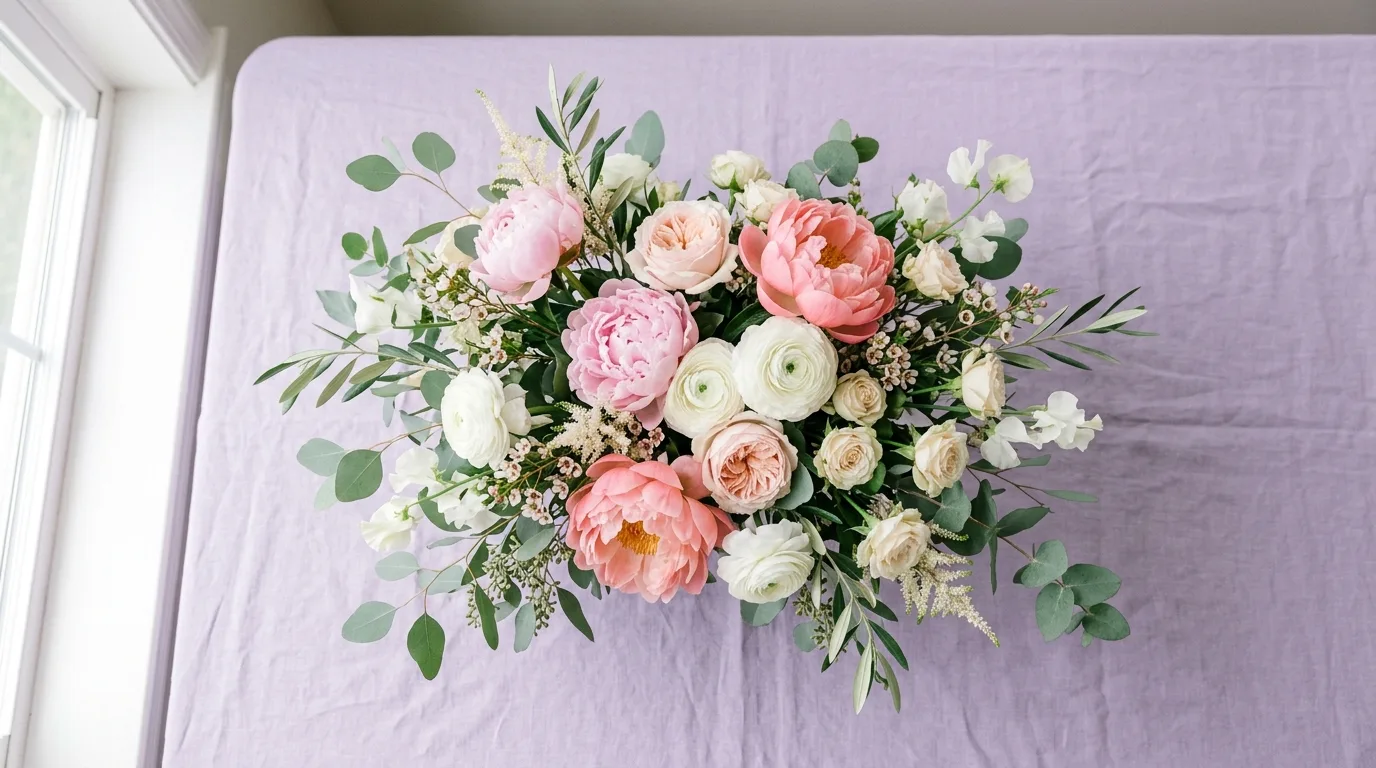
Wedding flower prices vary so much by region, season, and florist that any single number you read online is more likely to mislead than help. A more useful approach is to understand what you're paying for, list every piece you think you want, and then ask florists to price that list. This guide walks through the parts of a floral quote, the decisions that move it most, and the trade-offs that tend to stretch a budget without making the day look thin.
What a floral quote includes
Flowers are only part of a quote. A florist buys stems from wholesalers or growers, and the price you see also covers design time, conditioning (cleaning, cutting, and hydrating the stems for a day or two before the event), delivery, setup on the day, and often a late-night breakdown when the venue needs everything cleared. Vases, stands, arches, and candleholders are usually rented, and some florists charge for rentals that come back broken or don't come back at all.
Many florists also set an event minimum, meaning they'll take a wedding only if the order reaches a certain total, and that minimum can be higher on peak-season Saturdays. Ask about the minimum early, before you spend time on a detailed list, and ask whether delivery, setup, breakdown, rentals, and tax are included in the figure or added later.
Build the list before you ask for prices
A florist can price a list much more accurately than a mood board. Write down every piece you want, grouped by where it appears, with a count for each. The groups below cover most weddings.
- Personal flowers include the bridal bouquet, attendants' bouquets, boutonnieres, corsages, and any flower crowns or hair flowers.
- Ceremony flowers include an arch, altar piece, or backdrop, aisle arrangements, and anything at the entrance.
- Reception flowers include centerpieces for each guest table, the head or sweetheart table, the cake, the bar, and the escort card or welcome table.
Guest tables usually drive the reception total, so get a firm estimate from the venue of how many tables your guest count needs. Centerpieces multiply quickly, and a small change per table becomes a large change across fifteen or twenty tables.
The choices that move the price most
Variety and season come first. Peonies, garden roses, orchids, and lily of the valley are expensive in most markets, and anything flown in out of season costs more than the same flower at its local peak. Spray roses, carnations, alstroemeria, chrysanthemums, and stock tend to cost less and come in a wide range of colors, and mixing them with a few premium focal flowers lets the premium stems carry the look. The guide to flowers by season shows what's usually at its peak in each part of the year.
Labor is the next big factor. Boutonnieres, corsages, and flower crowns are small, but each one is wired and taped by hand, so a long list of them adds up. Large installations such as arches, hanging pieces, and floral walls need extra staff, ladders, and setup time, and often a return trip after the reception to take them down. Bouquet shape matters for the same reason, and the guide to bouquet styles explains which shapes take the most hand work.
Logistics account for the rest. A venue far from the florist's shop, a tight setup window, a ceremony and reception at two locations, or a strict end-of-night clearance time can each add delivery or labor charges. Ask the venue for its load-in and load-out times before you request quotes so the florist can price the real schedule.
Where to spend and where to save
Spend where people look longest and where cameras point most. The bridal bouquet appears in nearly every portrait, the ceremony backdrop sits behind the vows, and guest tables are in front of everyone for hours. Entrance pieces, restroom arrangements, and lavish cocktail-hour florals get less attention and are easier places to trim.
Repurposing helps when the logistics work. Aisle arrangements can move to the bar or cocktail tables, and attendants' bouquets can sit in vases on the head table. Moving pieces takes people and time between the ceremony and the reception, so confirm who will do it and whether the florist charges for the move.
Some savings change the look without making the room feel sparse. Greenery, branches, and candles fill space for less than the same volume of focal flowers, and alternating fuller centerpieces with smaller ones or with candle clusters lowers the stem count across the room. A single variety used generously can look more deliberate than a mix of many expensive stems. The guide to centerpieces that don't block conversation covers the height and size choices that go with these trade-offs.
Comparing quotes from different florists
Ask every florist for an itemized proposal that lists stem counts, or at least the main varieties, for each piece. Two quotes with the same total can describe very different work, and two very different totals sometimes come down to one florist including delivery, rentals, and breakdown while the other adds them later. Read the deposit, payment schedule, final-count date, and substitution terms before you compare totals.
It also helps to share a real budget range at the first meeting. Florists design to a number all the time, and a clear range lets them put the money where it will show, which saves a second round of cuts to a wish list. The questions to ask a wedding florist list what to settle before you sign.