Which flowers are in season, and when
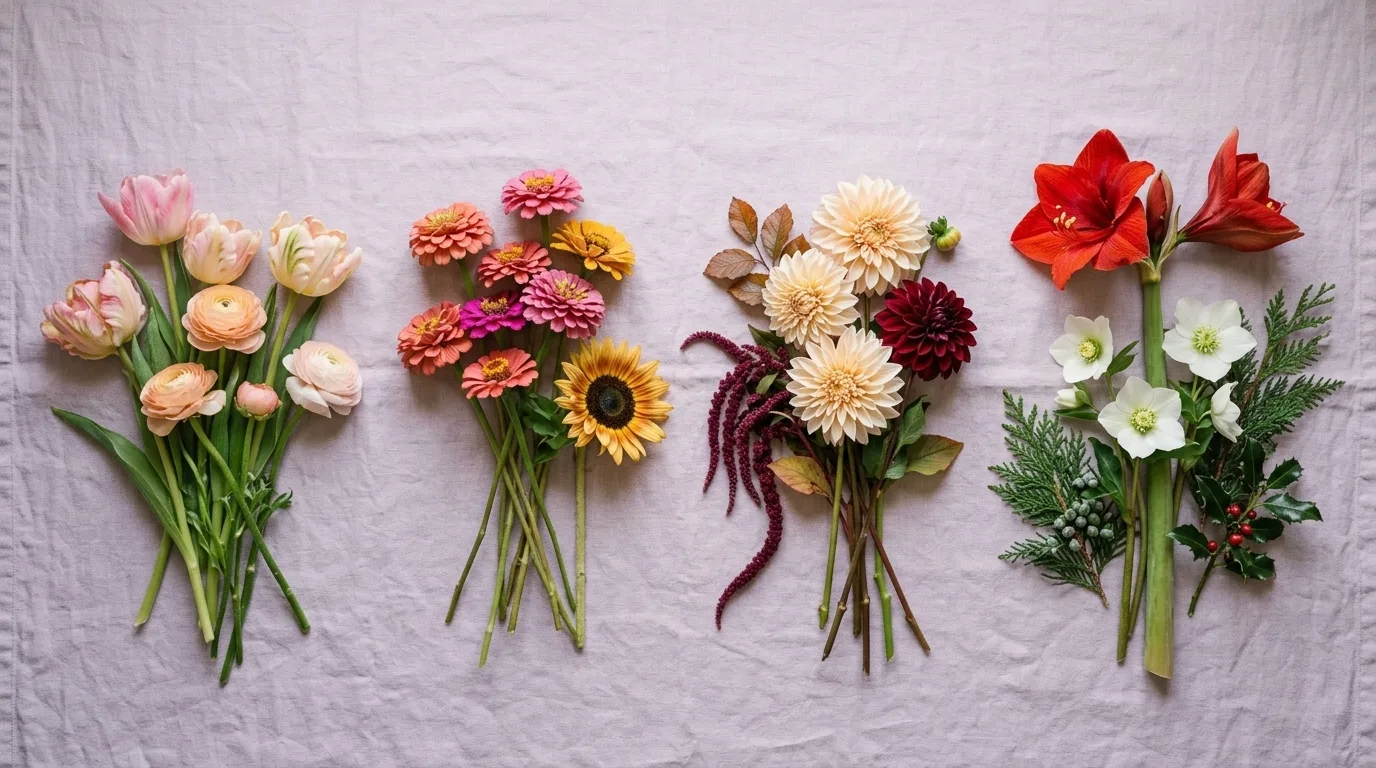
Almost any flower can be bought at almost any time of year if someone is willing to fly it in or grow it in a greenhouse. Seasonality still matters, because flowers at their local peak are usually easier to get, cheaper, and fresher than the same variety shipped a long way out of season. This guide gives typical windows for the continental US as of 2026. Expect timing to run a few weeks earlier in the South and on the West Coast and later in the North and at higher elevations, and check with a local grower or florist for your area.
Seasons at a glance
| Season | Usually at their local peak in much of the US |
|---|---|
| Spring (March to May) | Tulips, daffodils, hyacinths, ranunculus, anemones, lilac, sweet peas, and peonies by late spring |
| Summer (June to August) | Garden roses, hydrangeas, delphinium, snapdragons, zinnias, sunflowers, cosmos, lisianthus, and the first dahlias |
| Autumn (September to November) | Dahlias, chrysanthemums, asters, celosia, amaranth, ornamental grasses, rose hips, and berries |
| Winter (December to February) | Amaryllis, paperwhites, hellebores, evergreens, holly, and winterberry, with most other flowers from greenhouses or imports |
Spring
Spring starts with bulbs and branches. Tulips, daffodils, hyacinths, and grape hyacinths arrive first, along with flowering branches such as forsythia, quince, and cherry. Ranunculus and anemones are spring staples from greenhouses and warmer regions, and sweet peas, lilac, and lily of the valley follow in mid to late spring.
Peonies are the flower people ask about most, and their timing varies more than most. Field-grown peonies usually open in April and May in the South, in May in the Mid-Atlantic, and from late May through June in the Northeast and Upper Midwest, while growers in Alaska harvest in July and August. A wedding in early May in a northern state will usually rely on peonies shipped from somewhere warmer, a point the New England seasonal wedding article covers in detail.
Summer
Summer is the widest season for local flowers in most of the country. Garden roses, hydrangeas, delphinium, larkspur, snapdragons, cosmos, zinnias, sunflowers, lisianthus, and scabiosa all come into their own, and herbs like mint and basil make fragrant filler. Dahlias begin in midsummer in many areas and keep going well into autumn.
Heat is the main limit. Hydrangeas, sweet peas, and many garden roses wilt quickly in hot rooms or direct sun, while zinnias, celosia, sunflowers, and amaranth tolerate heat better. For an outdoor summer event, choose flowers that suit the forecast and keep arrangements out of direct sun until the last moment. The guide to bouquet styles notes which flowers hold up in a bouquet on a hot day.
Autumn
Early autumn brings the peak of dahlia season, which runs until the first hard frost. Chrysanthemums, asters, celosia, amaranth, marigolds, and strawflowers are at their best too, along with ornamental grasses, rose hips, berries, and branches with turning leaves. In warmer regions, roses often bloom again and zinnias keep going into October.
Late autumn is also when peonies from the Southern Hemisphere, mainly Chile and New Zealand, tend to reach US wholesalers. That's why peonies can turn up again around November and December, usually at a higher price than in spring.
Winter
Winter is the quiet season for local growers in most of the country, and most cut flowers then come from greenhouses, warmer states, and imports. Amaryllis, paperwhites, hellebores, and anemones are the flowers people tend to associate with winter, along with evergreens like pine, cedar, and fir, plus holly, winterberry, and eucalyptus. Tulips show up in quantity by midwinter, many of them forced in greenhouses or imported from the Netherlands.
Growers in California and along the Gulf Coast can supply ranunculus, anemones, and early bulbs as early as late winter. Elsewhere, a winter arrangement built on evergreens and branches with a few focal flowers usually looks more natural than one that imitates summer.
Flowers you can find all year
Some flowers are grown in greenhouses or in places with steady climates, such as the highlands of Colombia and Ecuador, and reach wholesalers every month of the year. Standard roses, spray roses, carnations, alstroemeria, chrysanthemums, gerbera daisies, lilies, calla lilies, orchids, hydrangeas, and lisianthus are the usual examples. They're dependable for any date, and several of them have long vase lives, with carnations and alstroemeria often lasting two weeks or more given fresh water and flower food.
Planning around the season
For a wedding or event, start with the date and ask what will be at its peak, then choose colors and shapes around those flowers. Working in that order is easier than picking a palette first and hunting for flowers to match it, and it usually costs less. The guide to budgeting for wedding flowers explains how season affects price, and the guide to making cut flowers last covers how to keep whatever you choose fresh.