How to make cut flowers last longer
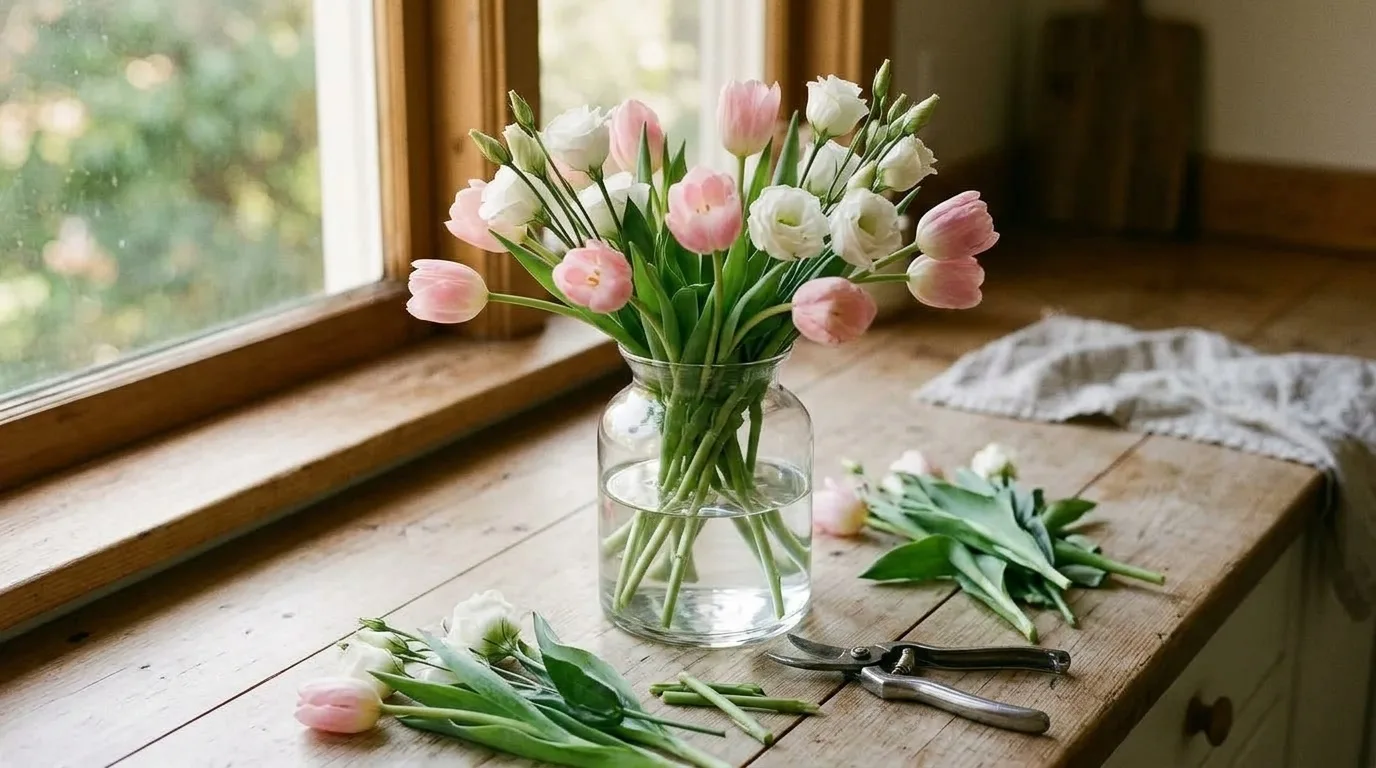
Cut flowers decline for a few predictable reasons. Bacteria clog the stems so they can't take up water, warmth and sun speed up aging, and some flowers are sensitive to ethylene, a gas given off by ripening fruit. Most of the care that lengthens vase life targets one of those causes, and none of it takes more than a few minutes every couple of days.
Start with a clean vase
A vase that looks clean can still hold bacteria from the last bunch, and those bacteria multiply quickly in water full of plant sap. Wash the vase with hot, soapy water and a bottle brush, rinse it well, and fill it with fresh room-temperature water. Bulb flowers such as tulips, daffodils, and hyacinths are the exception, since they generally do better in cool water.
Cut the stems before they go in
A stem that's been out of water starts to dry and draw air into its cut end, so every stem needs a fresh cut before it goes into the vase. Use sharp, clean shears or a knife and take off at least an inch at an angle, which opens more of the stem to water and keeps the end from sitting flat against the bottom of the vase. Dull scissors crush the tissue that carries water, so replace them if they mash the stem.
Woody stems like lilac, hydrangea, and flowering branches benefit from a short vertical slit up from the base after the angled cut. Avoid smashing woody stems with a hammer, an older habit that damages the tissue and gives bacteria more to feed on.
Strip the leaves below the waterline
Any leaf that sits underwater will start to rot, which clouds the water and speeds bacterial growth. Remove every leaf that would fall below the waterline, and take off bruised outer petals at the same time. On roses, the rough outer guard petals can come off too, though it's fine to leave them on a bloom that's still tight.
Use the flower food
The packet that comes with a bouquet is worth using. Commercial flower food usually combines sugar to feed the flowers, an acidifier that helps stems take up water, and a biocide that slows bacteria, and it works best at the strength printed on the packet. Stirring one packet into far more water than it's meant for weakens it, so match the packet to the vase, or use part of it in a smaller one.
Household tricks such as aspirin, pennies, soda, or a splash of vodka come up often, and none of them covers all three jobs the way flower food does. If you've run out, a common homemade version is a teaspoon of sugar, a few drops of plain household bleach, and a squeeze of lemon juice stirred into a quart of water.
Find a cool spot for the vase
Flowers last longest somewhere cool and out of direct sun. Keep vases away from radiators, heating vents, sunny windowsills, and appliances that give off heat, and keep them away from the fruit bowl. Ripening fruit, especially apples, bananas, and pears, gives off ethylene, and carnations, sweet peas, snapdragons, and many lilies and orchids age noticeably faster around it.
To stretch a bunch further, move it somewhere cool overnight, such as an unheated room or a cool entryway. Florists keep most flowers in coolers in the mid-30s Fahrenheit, and a cooler room at home slows aging in the same way, even if it can't match those temperatures. Skip the kitchen refrigerator if it holds fruit, for the ethylene reason above.
Refresh the water every couple of days
Change the water and recut the stems
Every two days or so, lift the flowers out, pour away the old water, rinse the vase, and refill it with fresh water and flower food. Recut each stem by about half an inch while they're out, and pull any flower that has wilted so it doesn't hurry the rest along. When most of a bunch has faded, the last good stems will often last several more days in a small vase of their own.
Flowers that need special handling
Daffodils release a sap that shortens the life of other flowers in the same water. Stand them in their own vase for several hours, ideally overnight, before mixing them into an arrangement, and don't recut them afterward, since a fresh cut releases more sap.
Tulips keep growing after they're cut and bend toward the light. Turn the vase daily, and if they flop, wrap the bunch snugly in paper and stand it in cool water for an hour or two to straighten.
Hydrangeas drink a lot and wilt quickly when they can't. A drooping head can often be revived by submerging the whole flower in cool water for 30 minutes to an hour, then recutting the stem and returning it to the vase.
Roses with a bent neck usually have an air bubble blocking the stem. Recut the stem under water by an inch or two and leave it in deep, cool water for a few hours.
Lilies are dangerous to cats. True lilies and daylilies can cause kidney failure in cats even in small amounts, including the pollen and the vase water, so keep them out of homes with cats entirely. Elsewhere, remove the pollen-heavy anthers as the flowers open to protect tablecloths and clothing.
Bouquets and event flowers
A wedding bouquet benefits from the same care on a smaller scale. Keep it in a vase of water whenever it isn't being carried, and keep it out of hot cars and direct sun between the ceremony and the reception. The guide to bouquet styles notes which flowers hold up in heat, and the guide to flowers by season explains why stems bought at their local peak often last longer. Event centerpieces that go home with guests will last longer with a fresh cut and clean water the next morning.